Bratabandha Invitation: Customs, Timeline and Wording
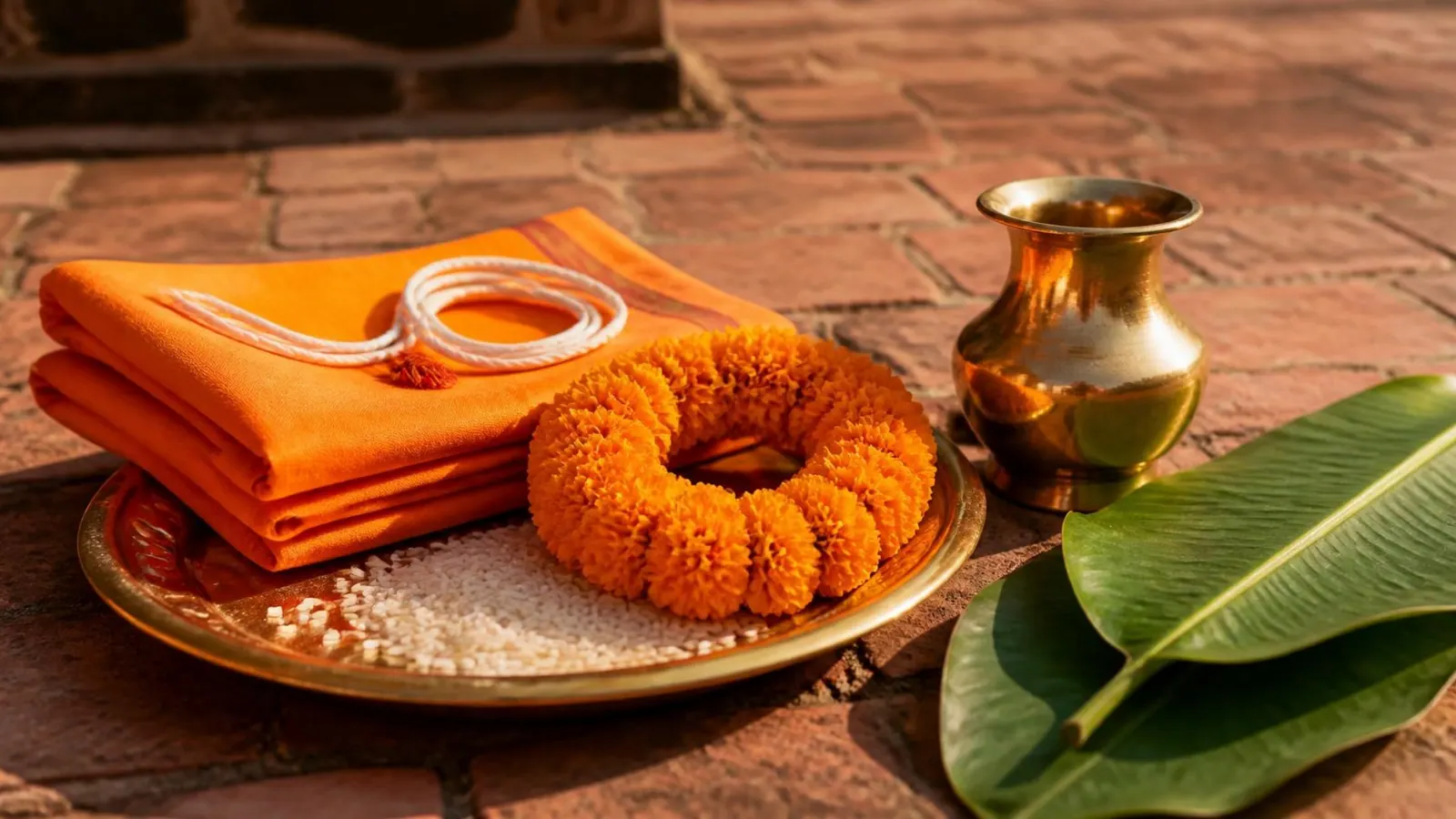
What happens at a bratabandha, how the priest's sait sets your invitation timeline, and copy-ready Nepali and English wording for the card and WhatsApp.

A bratabandha invitation card should name the boy as your son, give the ceremony date in Bikram Sambat with the AD date beside it, list the times for the rites and the bhoj, and give the venue with a contact person. The date comes from your priest's sait, so fix that first, book the venue, and send invitations about three to four weeks before the day.
This guide explains the bratabandha ceremony in plain words, shows how the sait shapes your timeline, and gives copy-ready Nepali and English wording. If you want to see an online version first, open our bratabandha invitation page.
What the bratabandha ceremony is
Bratabandha is the Nepali form of upanayana, the sacred thread rite. Britannica describes upanayana as an initiation that marks a boy's entry into student life, with a sacred thread and the Gayatri mantra at its centre. It is often called a second birth.
In Nepal, the rite brings two steps together. The Wikipedia entry on upanayana notes that bratabandha combines chudakarma (head shaving) with the thread ceremony, followed by a first alms round to relatives. For the family, it is one of the biggest days in a son's childhood.
Ages vary by text and by family. Britannica gives a classical range of roughly 5 to 24, while a scholar interviewed by PBS Religion and Ethics says the rite usually happens between 8 and 16 and ideally takes two days. Your priest and elders will guide you on what your family follows.
The main rites of the day
Knowing the order of the rites helps you write the programme on the card. Guests want to know when to arrive for the parts they care about, usually the bhiksha and the blessings.
Chudakarma: the first head shave
The day usually starts with chudakarma. The boy's head is shaved, and a small tuft (tuppi) is left at the crown. A Tips Nepal guide to bratabandha describes the boy's sisters receiving the hair on a plate before it is wrapped and kept aside.
Wearing the janai
Next the boy receives the janai, the sacred thread. Britannica describes it as a loop of three twisted cotton strands, worn over the left shoulder and across the chest.
Receiving the Gayatri mantra
The guru, usually the family priest, then gives the boy the Gayatri mantra. The Tips Nepal guide describes the guru whispering it under a cloth so that no one else hears, and the boy repeating it. In the PBS interview, the boy is then asked to chant the mantra at least three times a day.
Bhiksha from the mother and relatives
The bhiksha is often the most emotional moment. The boy, now a student, asks for alms. Tips Nepal lists the mother first, then grandmothers, sisters, aunts and other relatives, with the maternal uncle walking beside him. The alms are later offered to the guru.
The mama's role and the symbolic journey
The maternal uncle (mama) has a special place. In the step Tips Nepal calls the journey (deshantar), the boy sets out as if to leave home and study far away, often just a short walk to a nearby temple. His mama guides him and persuades him to come back and live with his family.
How the sait shapes your invitation timeline
Everything on the card depends on the sait (also written sahit), the auspicious date and time. Your priest or family astrologer works it out from the boy's birth chart and the panchanga. The panchanga is the same almanac used for wedding dates, and Onlinekhabar explains that the Nepal Panchanga Nirnayak Samiti decides festival dates and auspicious times nationally.
Some families pick Shree Panchami instead. The Rising Nepal notes that the day is regarded as auspicious for functions like marriage and bratabandha. Popular days fill venues and priests quickly, so book early.
Bratabandha celebrations have also grown. Republica reported that many families now host bratabandha parties on the scale of a wedding. A bigger guest list means you need more lead time and a clear way to count who is coming.
A bratabandha invitation timeline
This is a practical plan, counted back from the sait. Adjust it if your priest gives you a date at short notice.
| When | What to do | Why it matters |
|---|---|---|
| As early as possible | Ask the priest for the sait and confirm the time of the rites | Every other date depends on it |
| Within a week of the sait | Book the venue, cook or caterer, and the barber if needed | Popular days book out |
| Same week | Call the mama's family, grandparents and relatives abroad | They have roles, or need time to travel |
| 3 to 4 weeks before | Send the bratabandha invitation card to everyone | Gives guests time to plan |
| 1 to 2 weeks before | Count RSVPs and give the caterer a number | Avoids too much or too little food |
| 2 to 3 days before | Send a short reminder with the map link | People forget times and turns |
| On the morning | Share the venue location with anyone running late | Saves phone calls during the rites |
If relatives live abroad, give them the date the moment the sait is fixed. Our guide for families abroad explains how they can follow along and reply from wherever they are.
What to include on a bratabandha invitation card
Keep the card simple. These are the details guests look for:
- An invocation such as ॥ श्री गणेशाय नमः ॥, if your family uses one.
- The heading: शुभ व्रतबन्ध (many cards also write ब्रतबन्ध).
- The parents' names and the boy's name, with चि. before it.
- The date in BS first, with the AD date beside it.
- A short programme: rites, bhiksha and blessings, bhoj.
- The venue with a map link, or the home address.
- The family names at the bottom, a contact person and an RSVP date.
The structure follows a Nepali wedding card closely. Our wedding invitation wording guide explains each part in more detail, including honorifics and BS dates.
Bratabandha card matter in Nepali
These blocks use हजुर and honorific verbs throughout. The sample date, वि.सं. २०८३ माघ ८ गते शुक्रबार, matches Friday 22 January 2027. Replace it with your own sait and check the conversion against your patro.
॥ श्री गणेशाय नमः ॥

शुभ व्रतबन्ध

हाम्रा सुपुत्र चि. [छोराको नाम]को व्रतबन्ध (चूडाकर्म तथा उपनयन) संस्कार मिति २०८३ साल माघ ८ गते शुक्रबार शुभ साइतमा सम्पन्न हुने भएकाले उक्त शुभ अवसरमा हजुर सपरिवार उपस्थित भई चिरञ्जीवीलाई शुभ आशीर्वाद दिनुहुन हार्दिक अनुरोध गर्दछौं।

कार्यक्रम
चूडाकर्म तथा व्रतबन्ध संस्कार: बिहान ७:०० बजेदेखि
भिक्षा तथा आशीर्वाद: दिउँसो १२:०० बजे
प्रीतिभोज: बेलुका ५:०० बजेदेखि

स्थान: [घर वा भेन्यूको नाम], [ठेगाना]

दर्शनाभिलाषी
[हजुरबुबा तथा हजुरआमाको नाम]
[बुबा तथा आमाको नाम] सपरिवार
सम्पर्क: [फोन नम्बर]शुभ व्रतबन्ध
हाम्रा छोरा चि. [छोराको नाम]को व्रतबन्ध २०८३ माघ ८ गते शुक्रबार हुँदै छ।
यस शुभ दिनमा हजुरको उपस्थिति र आशीर्वादको अपेक्षा गर्दछौं।
स्थान: [भेन्यूको नाम], [ठेगाना]
प्रीतिभोज: बेलुका ५:०० बजेदेखि
[बुबा तथा आमाको नाम] परिवारआदरणीय मामा तथा माइजू,
[छोराको नाम]को व्रतबन्ध २०८३ माघ ८ गते शुक्रबार हुने भएको छ।
भिक्षा र देशान्तरमा हजुरहरूको साथ चाहिन्छ, त्यसैले बिहान ७:०० बजेअघि नै पाल्नुहोला।
[नाम] परिवारBratabandha invitation wording in English
English versions help younger guests, colleagues and relatives abroad. Put the BS date in brackets after the AD date.
Shubha Bratabandha

Mr [Father's name] and Mrs [Mother's name] [Surname]
request the pleasure of your company with family
at the Bratabandha ceremony of their son
[Boy's name]

Friday, 22 January 2027
(Magh 8, 2083 B.S.)

Chudakarma and Bratabandha rites: from 7:00 am
Bhiksha and blessings: 12:00 noon
Bhoj: 5:00 pm onwards

Venue: [Venue name], [Address]

With best compliments from
[Grandparents' names] and family
Contact: [Phone number]
शुभ व्रतबन्ध | Shubha Bratabandha

हाम्रा सुपुत्र चि. [छोराको नाम]
Our son [Boy's name]

वि.सं. २०८३ माघ ८ गते शुक्रबार
Friday, 22 January 2027

हजुर सपरिवार उपस्थित भई आशीर्वाद दिनुहुन हार्दिक अनुरोध गर्दछौं।
We warmly invite you and your family to bless him.

प्रीतिभोज | Bhoj: बेलुका ५:०० बजेदेखि | 5:00 pm onwards
स्थान | Venue: [Venue name], [Address]Mr and Mrs [Parents' names] invite you and your family to a bhoj to celebrate the Bratabandha of their son [Boy's name] Friday, 22 January 2027 (Magh 8, 2083 B.S.) 5:00 pm onwards [Venue name], [Address] Kindly reply by [date].
WhatsApp messages for the invitation and reminder
Send the link with a short personal message. Name the guest, name the boy, and say where to reply.
नमस्ते [नाम] ज्यू,
हाम्रा छोरा [छोराको नाम]को व्रतबन्ध २०८३ माघ ८ गते शुक्रबार हुँदै छ। निम्तो यस लिंकमा छ: [लिंक]
समय, स्थान र नक्सा लिंकमै छन्। कृपया लिंकमै आउने जानकारी दिनुहोला।
[नाम] परिवारNamaste [Name], Our son [Boy's name]'s Bratabandha is on Friday, 22 January 2027 (Magh 8, 2083). Here is our invitation: [link] The times, venue and map are all on the page. Please reply there by [date]. We hope you can come and bless him. [Name] family
नमस्ते! [छोराको नाम]को व्रतबन्ध पर्सि शुक्रबार हो। भोज बेलुका ५:०० बजेदेखि छ। नक्सा यहाँ छ: [लिंक]
A gentle reminder: the Bratabandha is this Friday, with the bhoj from 5:00 pm. Map: [link]
Choosing a design for a family ceremony
A bratabandha card should feel festive and rooted, not like a wedding card with the names changed. Designs built around doors, windows and marigolds suit a family ceremony at home well.
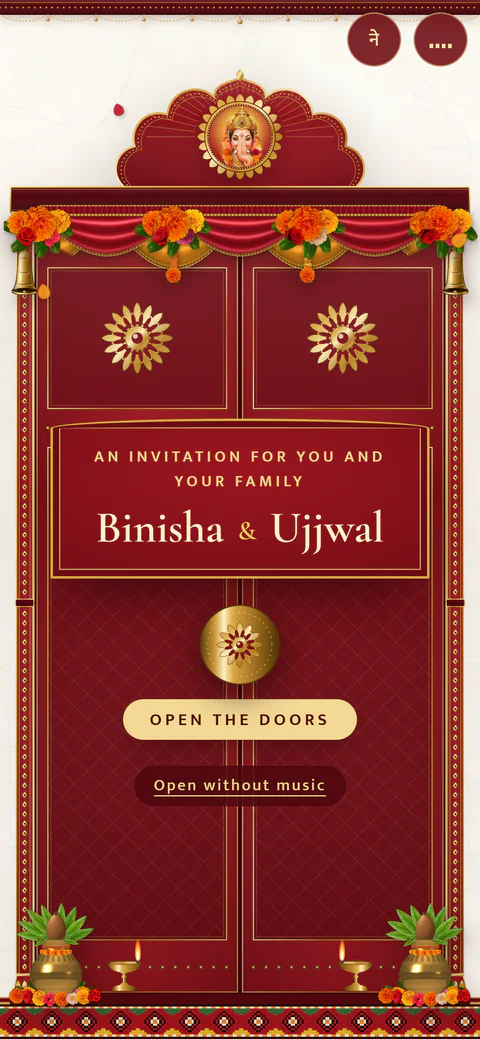
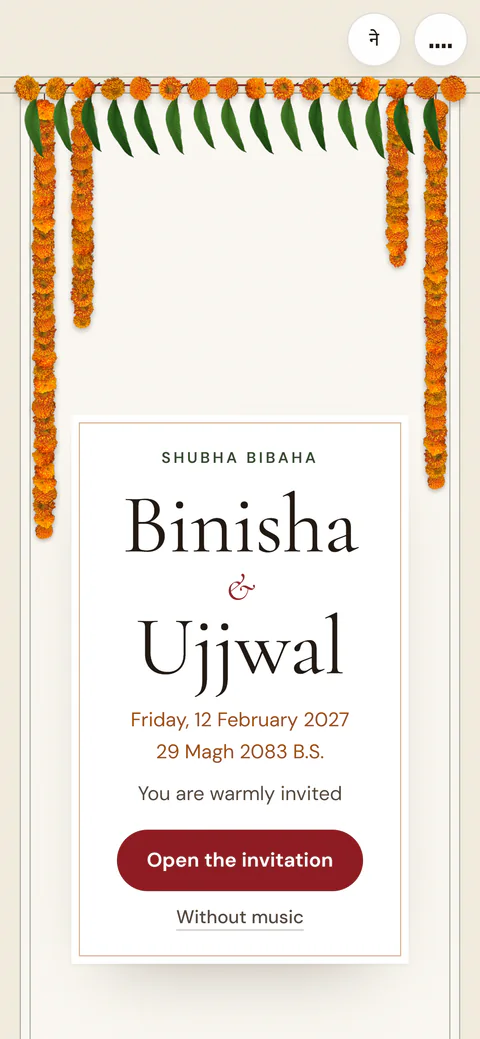
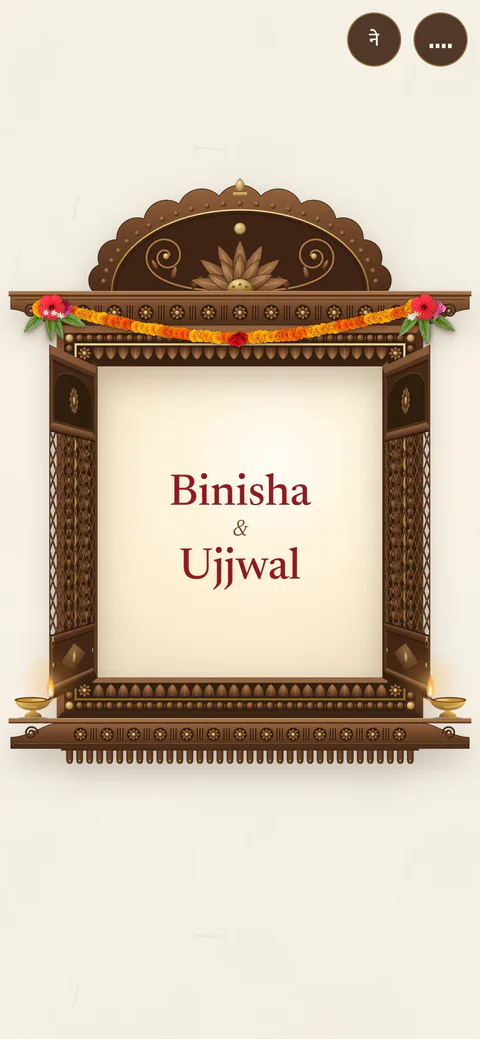
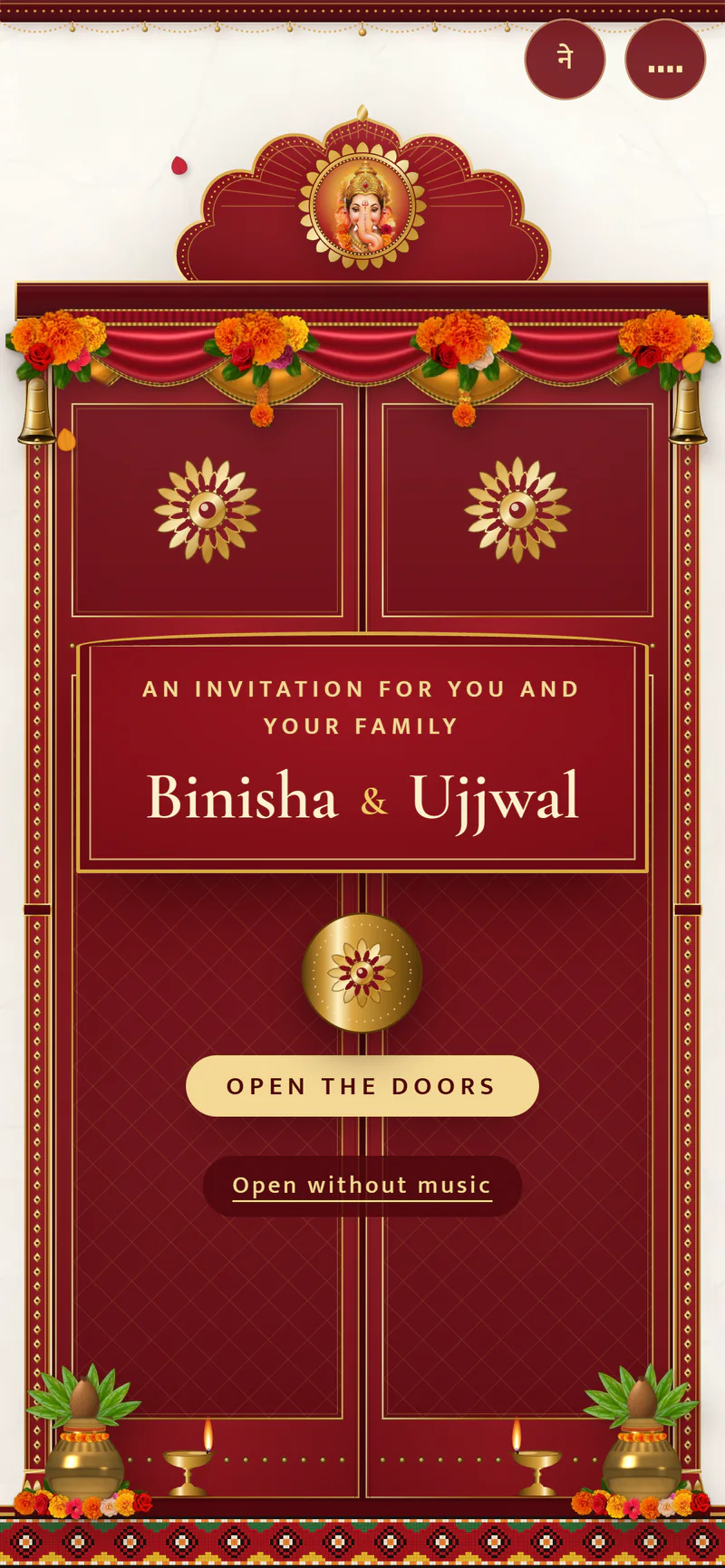
On Nimtto, Mangal opens a red temple door with bells, Sayapatri hangs marigold strings in a doorway, and Jhyal frames your wording in a carved Newari window.
Each event can have its own time and map, guests reply on the invitation, and you see the count in your dashboard. The same setup works for other family rites, such as a pasni or a daughter's gunyu cholo. Our pasni invitation guide has wording for that one too.
Before you send
Read the card once more for the details families most often get wrong: the boy's name spelling, the BS and AD dates, the bhoj time and the venue. Ask an elder to check the Nepali, and make sure the mama's family heard the news from you first.
When the wording is ready, a Nimtto designer can set it up in Nepali and English and review it with you before any guest sees it. Start from the bratabandha invitation page, see how it works, or compare plans on the pricing page.
Questions people ask
At what age is bratabandha done?
There is no single age. Classical texts and family custom differ, and many Nepali families hold it while the boy is still a child or a young teenager, on a date their priest chooses.
Is chudakarma the same as bratabandha?
Not exactly. Chudakarma is the head-shaving rite. In Nepal it is usually done on the same day, as the first part of the bratabandha, before the boy receives the janai.
How many days before a bratabandha should we send invitations?
Three to four weeks is a comfortable window for guests in Nepal. Tell close family and relatives abroad as soon as the sait is fixed, then send the full invitation later.
Who is named as the host on a bratabandha card?
The boy's parents send it, and the grandparents or the head of the family are often listed at the bottom with सपरिवार. The boy is named as their son, usually with चि. before his name.
Do guests bring gifts to a bratabandha?
Relatives often give money or gifts during the bhiksha or when they bless the boy. The card itself does not need to mention gifts.
Can a bratabandha be held on Shree Panchami without a separate sait?
Some families choose Shree Panchami because it is widely treated as an auspicious day for rites like bratabandha. Ask your priest whether it suits your son's chart before you book a venue.
Can we send a bratabandha invitation online?
Yes. An online invitation can hold the ceremony and bhoj times, a map and RSVP. See the bratabandha invitation page for how one looks.